Legal logic versus legal judgment. Thoughts I keep circling back to.

Legal logic versus legal judgment. Thoughts I keep circling back to.
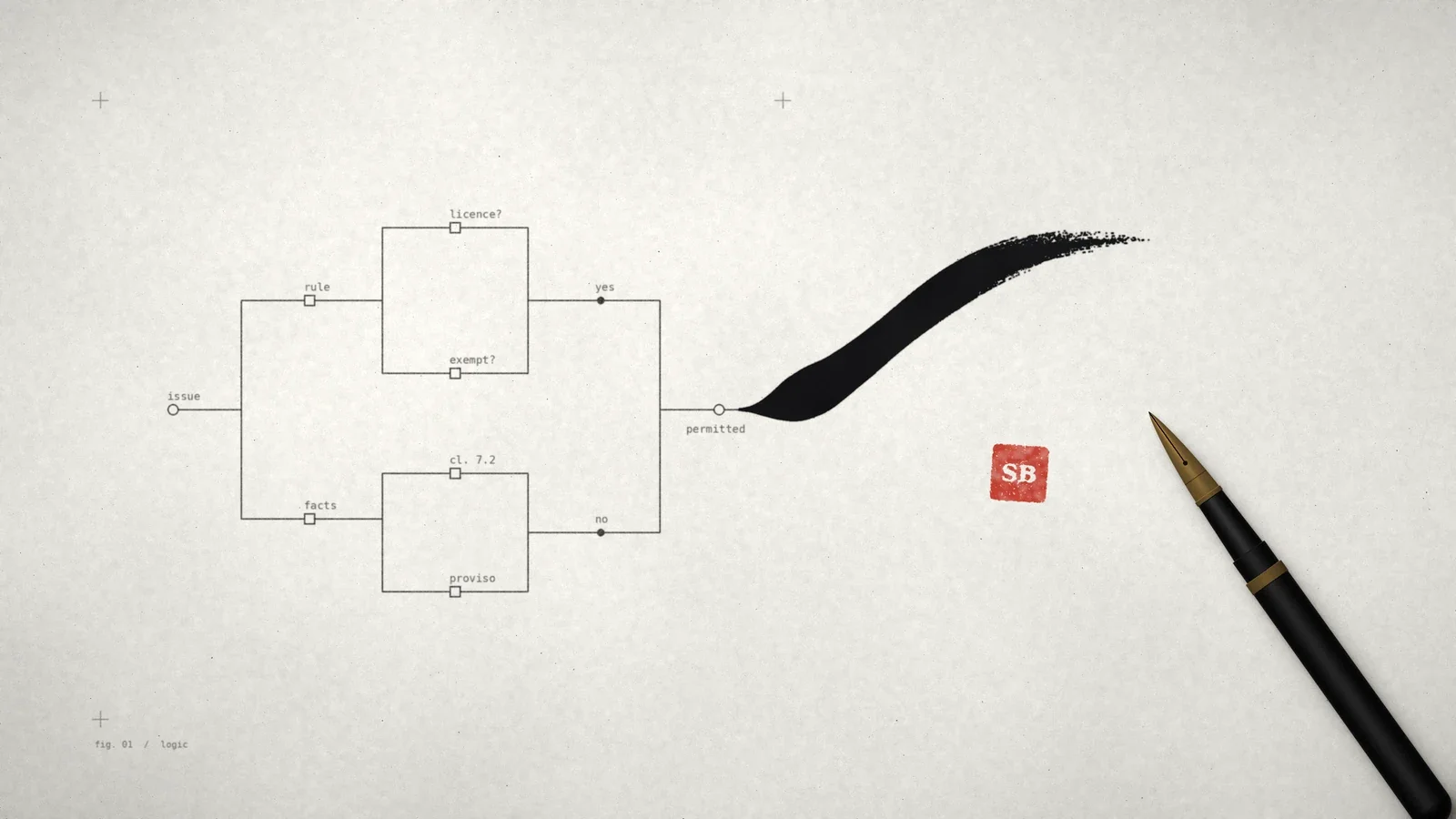
Most of what a lawyer does daily is just legal logic. Asking questions like: Does this need a license? Does this clause cover that? What's the rule, the facts, and what follows? If you can write it down, which I believe most of it can, you can hand it off to a machine for that initial pass.
But then there's the part that's harder to write down. When the analysis says something is permitted, do we actually go ahead? That decision often depends on factors outside the analysis, like how the regulator has behaved with others, how eager the business is to push this through now or later, whether "permitted" just means no one’s objected yet, or who’s sitting across from the regulator if things go wrong. I’ve never seen legal advice that addresses these nuances, and I'm not sure it’s even possible to fully capture them.
At first, I thought I'd call this the line between logic and judgment. Let logic be automated and judgment stay with us. Simple and clean. But real work makes that separation pretty blurry.
Mostly because, even within the logic, there’s judgment. Reasonable, material, best-effort judgments. Every rule we write has a soft spot where a human has to decide. Writing it down doesn't eliminate that rather it just hides it inside a word.
And those tools aren’t doing logic the way a checklist does. They’re pattern-matching machines. They can sift through dozens of documents and pick out which one feels off, a judgment call, or miss a proviso in a clause, which is more about logic. So, the idea that machines handle logic and humans handle judgment? It doesn’t quite hold up.
What I think really remains human territory is deciding who’s responsible for the call. The tool can verify if the structure checks out. It can't weigh the business's appetite against the regulator's mood or put its name on the decision. That’s all us. And the more I rely on automation, the more obvious that becomes.
And maybe that’s what the fuss over legal fees is really about. When a client pushes back, they’re mostly arguing about the logic part, the hours billed for what a machine did in ten minutes. No one complains about paying for the call itself.
There's one last layer I didn't see coming until I started using the tools that I built. After the machine’s first pass, deciding how much to check becomes a judgment call itself. How hard should I look? What’s enough? When can I say, ‘This is good enough to move forward’? There’s no rule for that either.
My current approach? Document the logic clearly so I can review it later. Be honest about which parts are judgment - really just the logic I didn’t bother writing down. Then, use the freed-up time to make the calls others can't or won’t. I don't know how long this split will last, but today? It's working.
Sandeep Bhalothia, ‘Legal logic versus legal judgment. Thoughts I keep circling back to.’ (Cleared & Settled, 2 October 2026) <https://sandeepbhalothia.com/writing/legal-logic-versus-legal-judgment> accessed 2 October 2026